

The accounting world is changing fast with a digital transformation accounting revolution. Old ways of doing things are being replaced by new, smart systems. These systems make work more efficient and accurate.
Sean P. Breheney and others say that artificial intelligence, cloud computing, and data analytics are changing finance. These new tools add value to services for clients.
The accounting technology impact goes beyond just making things automatic. It also brings better data analysis. Now, professionals use these tools for deeper insights and better decisions.
This change is a big deal for how accounting services are given and valued today.
The Evolution of Accounting Technology
Accounting has seen a huge change with technology. This change has changed how we handle financial data. It’s now easier and more accurate.
From simple tools to digital systems, accounting has grown a lot. Each new tool made old ones less useful.
From Manual Ledgers to Digital Systems
At first, accounting used only physical tools and paper records. The abacus was key for many years, and leather-bound ledgers kept track of money.
Doing accounting by hand needed a lot of care. Accountants had to double-check numbers and write neatly. Mistakes could hurt businesses a lot.
Related Posts:
- How Often Does Technology Change The Pace of Innovation

- How Technology Is Changing the Way We Communicate…

- How Does Smart Grid Technology Work Modernizing…

- What Is Information Technology in Education Tools…
- How Important Is Technology in Schools Enhancing…

- How Technology Affects Our Behavior Psychology in…

In the mid-1900s, computers came to accounting offices. They did simple math but needed people to enter data.
Key Technological Milestones in Accounting
The 1980s brought special accounting software. This made accounting more than just spreadsheets.
These programs did tasks like posting to ledgers and making trial balances. The 1990s saw systems that linked accounting with other business areas.
Now, we have AI and machine learning. They find things humans might miss and get better at analyzing data.
| Era | Primary Technology | Key Limitations | Major Advancements |
|---|---|---|---|
| Pre-1950s | Manual ledgers & abacus | Extremely time-consuming | Standardised accounting principles |
| 1950s-1970s | Mainframe computers | Required specialised operators | Automated calculations |
| 1980s-1990s | Desktop accounting software | Limited integration | Specialised financial modules |
| 2000s-Present | Cloud-based systems & AI | Security concerns | Real-time processing & analytics |
The Shift Towards Cloud-Based Solutions
Cloud accounting is the latest in finance tech. It moves data and software from local computers to servers online.
Cloud accounting makes it easy to work together and access data anywhere. Everyone gets the latest version automatically.
75% of finance leaders think data mining and analytics will change accounting a lot. This shows why accounting automation through the cloud is key.
Today’s systems process data fast and keep it safe. The cloud lets businesses grow without big costs.
How Does Technology Affect Accounting: Core Impacts
Modern technology has changed accounting a lot. It has made big changes in three key areas. These changes make financial work smarter and quicker.
Enhanced Efficiency Through Automation
Technology has made accounting much faster. Automated systems do tasks quickly and without mistakes.
Studies show that AI helps accountants work with more clients. They finish monthly statements 7.5 days sooner than before. This is thanks to many automated tasks.
- Automated data entry eliminating manual transcription
- Intelligent invoice processing systems
- Automated reconciliation matching transactions
- AI-powered classification of expenses
These tools save a lot of time. They also cut down on the need for humans to do simple tasks. This leads to an 8.5% drop in time spent on routine tasks.
Improved Accuracy and Error Reduction
Technology makes accounting more accurate. Automated systems work without getting tired or distracted.
AI can handle lots of data fast and accurately. It helps avoid common mistakes like wrong numbers or wrong expense types.
- Transposition errors in numerical data
- Misclassification of expenses
- Duplicate entries
- Calculation mistakes
Less human work means better data quality. Automated checks also help spot mistakes early.
Real-Time Financial Reporting Capabilities
Today’s accounting systems give instant access to financial info. This changes how businesses check their finances.
Cloud-based systems keep data up to date for everyone. Leaders can see the latest financial info, not just old reports.
Real-time reports help make better decisions. They show things like cash flow and profit right away.
- Immediate visibility into cash flow
- Current profit and loss statements
- Up-to-date balance sheets
- Instant budget versus actual comparisons
Adding data analytics tools makes these reports even better. Businesses can spot trends as they happen, not after.
These changes show how tech has made accounting more than just keeping records. It’s now a key part of business strategy. And with AI in accounting, it will keep getting better.
Accounting Automation Technologies Transforming the Industry
The accounting world is changing fast thanks to new tech. Robotic process automation and artificial intelligence are leading this change.
Robotic Process Automation (RPA) in Accounting
Robotic process automation is a big step forward for accounting. It automates tasks that used to need a person. This makes accounting faster and less prone to mistakes.
Xero’s Automation Features
Xero’s software makes financial management easier with its automation. It handles bank transactions, invoices, and payment reminders automatically. This saves a lot of time and keeps financial records accurate.
Xero also lets teams work together on financial data in real-time. This makes decision-making faster and improves how work flows.
QuickBooks Online Automated Processes
QuickBooks Online has tools that change bookkeeping for the better. It sorts expenses, tracks mileage, and handles payroll. These features cut down on paperwork.
Its invoice system is also top-notch. QuickBooks sends invoices, tracks payments, and reminds about late payments. This keeps cash flow steady without needing to do it manually.
Artificial Intelligence and Machine Learning Applications
Artificial intelligence is changing accounting by making systems smarter. AI accounting software can handle lots of data fast. It spots trends and oddities that humans might miss.
Sage Intacct’s AI Capabilities
Sage Intacct uses AI to offer top-notch financial solutions. Its machine learning looks at past data to forecast spending and cash flow. This helps make better financial choices.
Its AI also watches for transactions that don’t fit the usual pattern. This stops financial problems before they start.
IBM Watson in Financial Analysis
IBM Watson uses smart computing for financial analysis. It looks at all sorts of data, like emails and reports. This gives deeper insights than old methods.
Watson’s learning abilities make its financial forecasts better over time. It keeps getting smarter at predicting the future. This is a big step forward in planning and analysis.
Data Analysis Revolution in Modern Accounting
The accounting world is changing fast. Gone are the days of just crunching numbers. Now, accountants are all about making sense of data to help businesses grow.
Today’s accountants use top-notch tools to find important insights in big financial data. This helps them make smart decisions and tailor services to meet client needs.
Advanced Analytics Tools and Platforms
Powerful analytics platforms are key for modern accounting. They handle complex financial data to spot trends and opportunities that old spreadsheets miss.
Tableau for Financial Visualisation
Tableau has changed how accountants share and understand financial data. Its easy-to-use interface lets them create interactive dashboards that make complex data easy to see.
Tableau turns numbers into stories that show what’s really happening. This makes financial reporting clear for everyone, not just experts.
Microsoft Power BI Implementation
Microsoft Power BI is great for accounting because it offers deep business insights. It’s easy to use with other Microsoft tools, making it a popular choice for many.
Power BI helps accountants build detailed forecasts and track performance. Its automatic updates keep financial reporting up to date with the latest data.
| Analytics Platform | Primary Strengths | Best For | Integration Capabilities |
|---|---|---|---|
| Tableau | Data visualisation, interactive dashboards | Client-facing reports, trend analysis | Multiple data sources, cloud platforms |
| Microsoft Power BI | Data modelling, automated reporting | Internal analysis, operational metrics | Microsoft ecosystem, enterprise systems |
| Qlik Sense | Associative analytics, self-service | Exploratory analysis, large datasets | API connections, custom applications |
“Data analysis has transformed accounting from a historical recording function to a predictive advisory role. The modern accountant doesn’t just report what happened—they anticipate what will happen.”
Predictive Analytics and Forecasting
Predictive analytics is a big leap in accounting tech. It uses past data to predict future financial outcomes with great accuracy.
Accountants use these models to spot cash flow issues, find new opportunities, and guide clients on big decisions. This shift makes accounting a forward-thinking service.
Big Data Processing in Accounting Systems
Today’s accounting systems handle huge amounts of data from various sources. This lets them do detailed financial analysis that was once impossible.
These systems find hidden connections and trends in big data, helping make better business choices. Handling big data is a key accounting trend for the future.
Advanced algorithms can now spot oddities, predict outcomes, and offer smart advice. This tech makes accounting firms key partners, not just rule-followers.
Benefits and Advantages of Technological Integration
Technological integration changes accounting in big ways. It’s not just about making things more efficient. It brings real value to financial work, decision-making, and following rules.
Cost Reduction and Resource Optimisation
Modern accounting tech cuts costs and uses resources better. It automates tasks, freeing up teams for more important work.
Companies save money by making processes smoother. Going digital cuts down on paper and storage needs.
It’s not just about saving money. Teams can focus on analysis and helping clients.
Enhanced Decision-Making Capabilities
Having data in real-time changes how companies make financial decisions. Advanced analytics give a clear view of performance and trends.
AI in accounting makes reports more accurate. Studies show companies get 12% better reports with more details.
Tools for predicting the future help make decisions before they need to be made. Leaders can prepare for market changes.
| Technology Type | Decision-Making Impact | Implementation Timeline |
|---|---|---|
| Advanced Analytics Platforms | Real-time performance insights | 3-6 months |
| Predictive Modelling Tools | Future trend forecasting | 6-12 months |
| Generative AI Systems | Enhanced reporting detail | 4-8 months |
Improved Compliance and Risk Management
Technology makes following rules easier. Automated tools check transactions against changing rules.
Blockchain accounting makes transactions safer. It keeps records that can’t be changed.
AI helps keep systems safe by spotting odd activities. It warns of possible threats early.
These systems watch for rule changes all the time. They update automatically to keep up with new rules.
Challenges and Considerations for Implementation
Organisations face many challenges when introducing new accounting systems. These hurdles need careful planning and strategic approaches. This ensures successful adoption and a good return on investment.
Data Security and Privacy Concerns
Financial data is very sensitive for any organisation. Moving to digital platforms brings new risks. About 22% of businesses have faced cyber crime in the last year, costing £1,120 on average per victim.
Only 24% of companies are proactive about third-party security. This lack of preparedness is a big risk. 43% of accounting pros worry about data security with new tech.
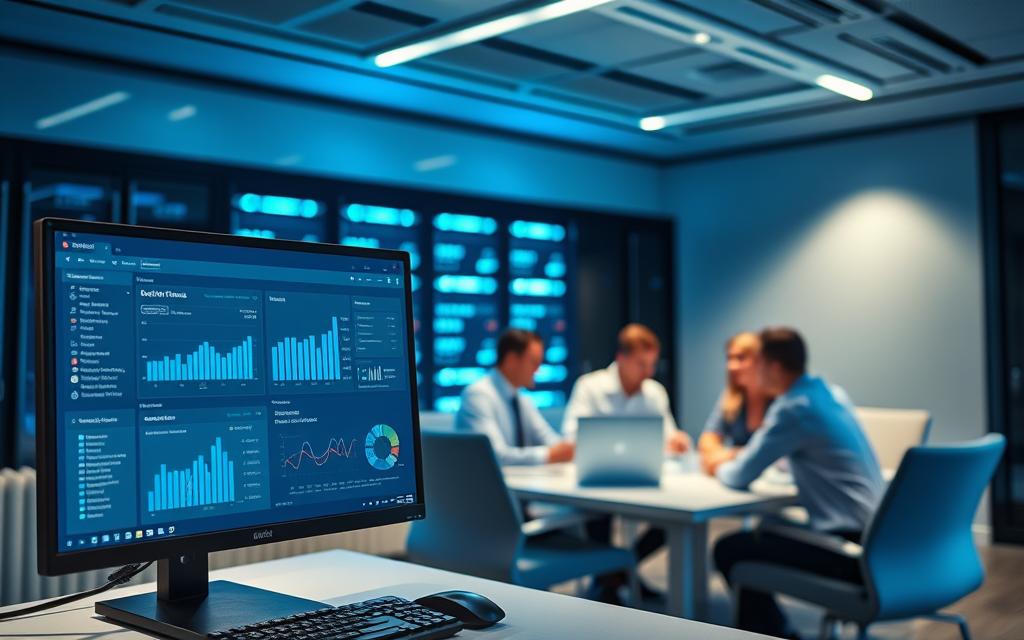
Cloud accounting raises more data protection issues. Companies must use strong encryption and follow data protection laws. Regular audits and training are key to a successful tech rollout.
Staff Training and Skill Development
Training is vital for staff to use new systems well. This training takes time and is a big investment.
62% of accountants fear AI errors. 37% worry about job security with automation. Clear communication and change management are essential during this time.
Training should cover both technical skills and mindset changes. Employees need to see how new tech improves their roles. Companies that invest in staff see better adoption and use of new systems.
Integration with Existing Systems
Most companies have old systems that need to work with new tech. Integration issues can cause problems and data silos. This makes new systems less effective.
Good integration needs careful planning and technical skills. Companies must plan data migration, API compatibility, and system interoperability. Testing is key to find and fix issues before launch.
The impact of accounting tech goes beyond immediate benefits. Companies must think about long-term maintenance and scalability. Proper integration planning ensures a smooth transition and keeps business running smoothly.
Future Trends in Accounting Technology
The accounting world is on the verge of a big change. New technologies will change how we handle financial data. They will make accounting automation and data analytics even better.

Companies that look ahead are getting ready for these changes. They know they need to use these new technologies to stay ahead.
Blockchain Technology in Accounting
Blockchain is a new way to record transactions. It’s a system that keeps a permanent record of financial data.
Every transaction is checked by many computers. This makes it very secure and clear. It also cuts down on fraud and keeps data safe.
Many are looking into blockchain for smart contracts and audit trails. These could change how we do accounting forever.
Internet of Things (IoT) Applications
The Internet of Things links physical things to the internet. In accounting, it can send out financial data automatically.
Here are some ways it could be used:
- Smart inventory systems that track stock levels as they change
- Connected equipment that tracks usage for accurate billing
- Fleet management systems that cut down on logistics costs
This constant flow of data lets us do accounting in real-time. We can make decisions based on what’s happening now, not just what happened before.
Continuous Accounting Concepts
Continuous accounting is different from the old way of doing things. It deals with transactions as they happen, not just at the end of the month.
This method has many benefits:
- It gets rid of the delays at the end of the month
- It gives us financial statements that are always up to date
- It lets us manage things proactively, not just react to problems
This change needs strong accounting automation tools and advanced data analytics platforms. It makes financial management more dynamic and quick to respond.
Other big changes include better AI and stronger cybersecurity. Also, more companies are focusing on sustainability reports to track their environmental impact.
These changes are the next big step in accounting technology. Those who adapt to these changes will lead the way. For more on this, check out this analysis on how technology is changing the accounting world.
Conclusion
The accounting world has changed a lot, moving from old-fashioned ledgers to modern digital systems. This change is a big deal, changing how we handle and understand financial data.
Artificial intelligence and new tech work best with human skills. Together, they make accounting better. AI helps, but humans make sure decisions are right and fair.
Keeping up with tech is key to staying relevant in accounting. Those who use these tools well become valuable advisors. They help make sense of the new insights from financial reports.
These changes bring many benefits. They make work faster, smarter, and safer. They also help build better relationships with clients. These are the new standards in accounting, opening doors for those who adapt.
FAQ
How has technology historically transformed accounting practices?
Accounting has changed a lot over time. It started with manual books and the abacus. Then, in the mid-20th century, it moved to computer systems. In the 1980s and 1990s, special financial software came along.
FAQ
How has technology historically transformed accounting practices?
Accounting has changed a lot over time. It started with manual books and the abacus. Then, in the mid-20th century, it moved to computer systems. In the 1980s and 1990s, special financial software came along.
What are the core impacts of technology on accounting?
FAQ
How has technology historically transformed accounting practices?
Accounting has changed a lot over time. It started with manual books and the abacus. Then, in the mid-20th century, it moved to computer systems. In the 1980s and 1990s, special financial software came along.
FAQ
How has technology historically transformed accounting practices?
Accounting has changed a lot over time. It started with manual books and the abacus. Then, in the mid-20th century, it moved to computer systems. In the 1980s and 1990s, special financial software came along.
Which automation technologies are revolutionising the accounting industry?
FAQ
How has technology historically transformed accounting practices?
Accounting has changed a lot over time. It started with manual books and the abacus. Then, in the mid-20th century, it moved to computer systems. In the 1980s and 1990s, special financial software came along.
FAQ
How has technology historically transformed accounting practices?
Accounting has changed a lot over time. It started with manual books and the abacus. Then, in the mid-20th century, it moved to computer systems. In the 1980s and 1990s, special financial software came along.
How is data analysis changing modern accounting?
FAQ
How has technology historically transformed accounting practices?
Accounting has changed a lot over time. It started with manual books and the abacus. Then, in the mid-20th century, it moved to computer systems. In the 1980s and 1990s, special financial software came along.
FAQ
How has technology historically transformed accounting practices?
Accounting has changed a lot over time. It started with manual books and the abacus. Then, in the mid-20th century, it moved to computer systems. In the 1980s and 1990s, special financial software came along.
What benefits does technological integration offer accounting practices?
FAQ
How has technology historically transformed accounting practices?
Accounting has changed a lot over time. It started with manual books and the abacus. Then, in the mid-20th century, it moved to computer systems. In the 1980s and 1990s, special financial software came along.
FAQ
How has technology historically transformed accounting practices?
Accounting has changed a lot over time. It started with manual books and the abacus. Then, in the mid-20th century, it moved to computer systems. In the 1980s and 1990s, special financial software came along.
What challenges do organisations face when implementing accounting technologies?
FAQ
How has technology historically transformed accounting practices?
Accounting has changed a lot over time. It started with manual books and the abacus. Then, in the mid-20th century, it moved to computer systems. In the 1980s and 1990s, special financial software came along.
FAQ
How has technology historically transformed accounting practices?
Accounting has changed a lot over time. It started with manual books and the abacus. Then, in the mid-20th century, it moved to computer systems. In the 1980s and 1990s, special financial software came along.
What future trends are shaping accounting technology?
FAQ
How has technology historically transformed accounting practices?
Accounting has changed a lot over time. It started with manual books and the abacus. Then, in the mid-20th century, it moved to computer systems. In the 1980s and 1990s, special financial software came along.
FAQ
How has technology historically transformed accounting practices?
Accounting has changed a lot over time. It started with manual books and the abacus. Then, in the mid-20th century, it moved to computer systems. In the 1980s and 1990s, special financial software came along.
Will technology replace human accountants?
FAQ
How has technology historically transformed accounting practices?
Accounting has changed a lot over time. It started with manual books and the abacus. Then, in the mid-20th century, it moved to computer systems. In the 1980s and 1990s, special financial software came along.
FAQ
How has technology historically transformed accounting practices?
Accounting has changed a lot over time. It started with manual books and the abacus. Then, in the mid-20th century, it moved to computer systems. In the 1980s and 1990s, special financial software came along.